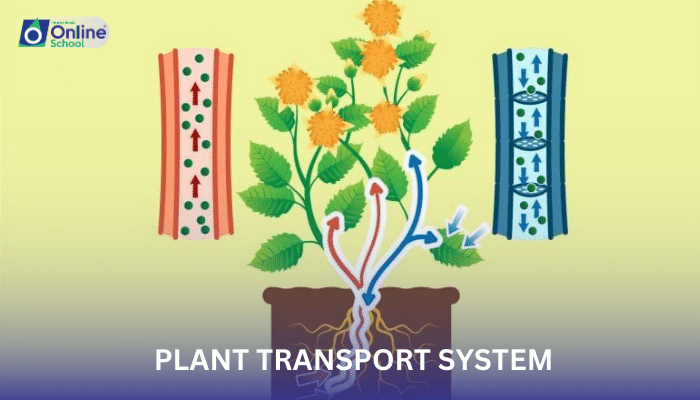
Learning Outcomes in Listing:
i. Comprehend the concept of transport and its significance in plants.
ii. Identify the internal structure of roots and root hairs.
iii. Understand the mechanisms of water and mineral salt uptake through roots by active and passive means.
Learning Outcomes Described:
Students will gain an understanding of how plants transport essential nutrients and water from the soil to their tissues. They will explore the structure of roots and root hairs and how these specialized structures facilitate the uptake of water and minerals from the soil, essential for plant growth and survival.
Summary of Lesson:
Transport in plants is a vital process that involves the movement of water and minerals from the soil into the plant. This lesson focuses on the roots' role in this process, particularly the function of root hairs in actively and passively absorbing these essential nutrients.
i. Understanding Plant Transport:
The necessity of transport mechanisms for the delivery of water and nutrients throughout the plant.
ii. Root Structure:
An examination of the root's anatomy, including the root cap, apical meristem, and zone of elongation.
iii. Root Hair Specialization:
A focus on the role of root hairs in increasing surface area for absorption.
iv. Mechanisms of Nutrient Uptake:
Active Absorption:
The energy-dependent process of nutrient uptake against the concentration gradient.
Passive Absorption:
The movement of water and minerals into the plant driven by transpiration pull and soil nutrient concentration.
List of Important Questions for Self-Study:
i. How do root hairs enhance a plant's ability to absorb water and nutrients?
ii. What is the difference between active and passive absorption in plant roots?
iii. Why is the process of transport critical to plant health and growth?
iv. How do environmental conditions affect the rate of nutrient uptake in plants?
Important Terminologies Used in Lesson:
i. Transport: The movement of substances within the plant.
ii. Root Hairs: Extensions of the root that increase surface area for absorption.
iii. Active Absorption: Uptake of substances using energy, typically from ATP.
iv. Passive Absorption: Uptake of substances without the use of energy, following concentration gradients.
v. Transpiration Pull: The force generated by the evaporation of water from the stomata, which helps draw water up through the plant.
